
00 West Wycombe
West Wycombe
The new HW&DMRS club 00 exhibition layout
“I doubt if there is another main line in the country that witnessed such a wide and varied range of trains or steam locos and early diesels than the GW & GC Joint in the 1950s and early 60s. Add to that six named trains, the Wembley football specials, holiday traffic from the Midland to the south coast, excursions and much more! With surviving features of Brunel’s original broad-gauge line and Edward Watkins dream to reach Paris via this route, this all adds up to a unique modelling opportunity on the club’s doorstep”.
The story so far
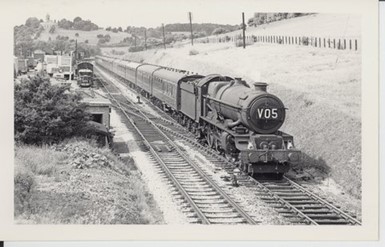
High Wycombe & District Model Railway Society have chosen West Wycombe station as the subject of our new 00 exhibition layout. We will capture this station and its goods yard during the final years of steam haulage on the GW&GC Joint, 1955-66, when express trains from Marylebone and Paddington, outer London suburban services and a wide range of freight movements were reflected in a very busy 24-hour railway.
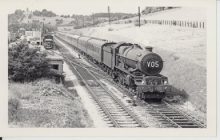
The variety of trains types and motive power during this period was exceptional. An ever-growing list of steam and diesel locos that were recorded during those years has topped 90 and is still growing! Obviously most WR examples feature, plus ER and LMR classes during the periods when the management of the Joint line transferred to those regions. In addition, SR locos appear plus a huge array of early diesels.
Add to that a fascinating range of special trains and you have, possibly, an unmatched variety of rail traffic in southern England. Plus, the Brunel heritage. His single-track broad-gauge line reached Wycombe in 1854 and was then extended to Aylesbury and Oxford. West Wycombe station was opened in 1862, at that time situated in a very rural location west of the town.
So, there it is, a setting right on our doorstep that played host to an unrivalled variety of trains and motive power in the transition era, a project that is achievable in delivery and relatively quick build time, and one that embraces our local railway heritage and notably the stories of Brunel’s impact locally and Edward Watkins dream to reach Paris!
Our Model – Progress as at March 2026
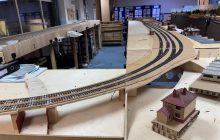
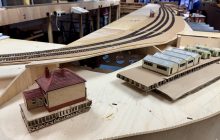
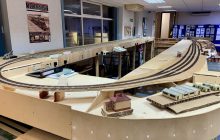
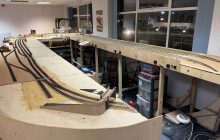
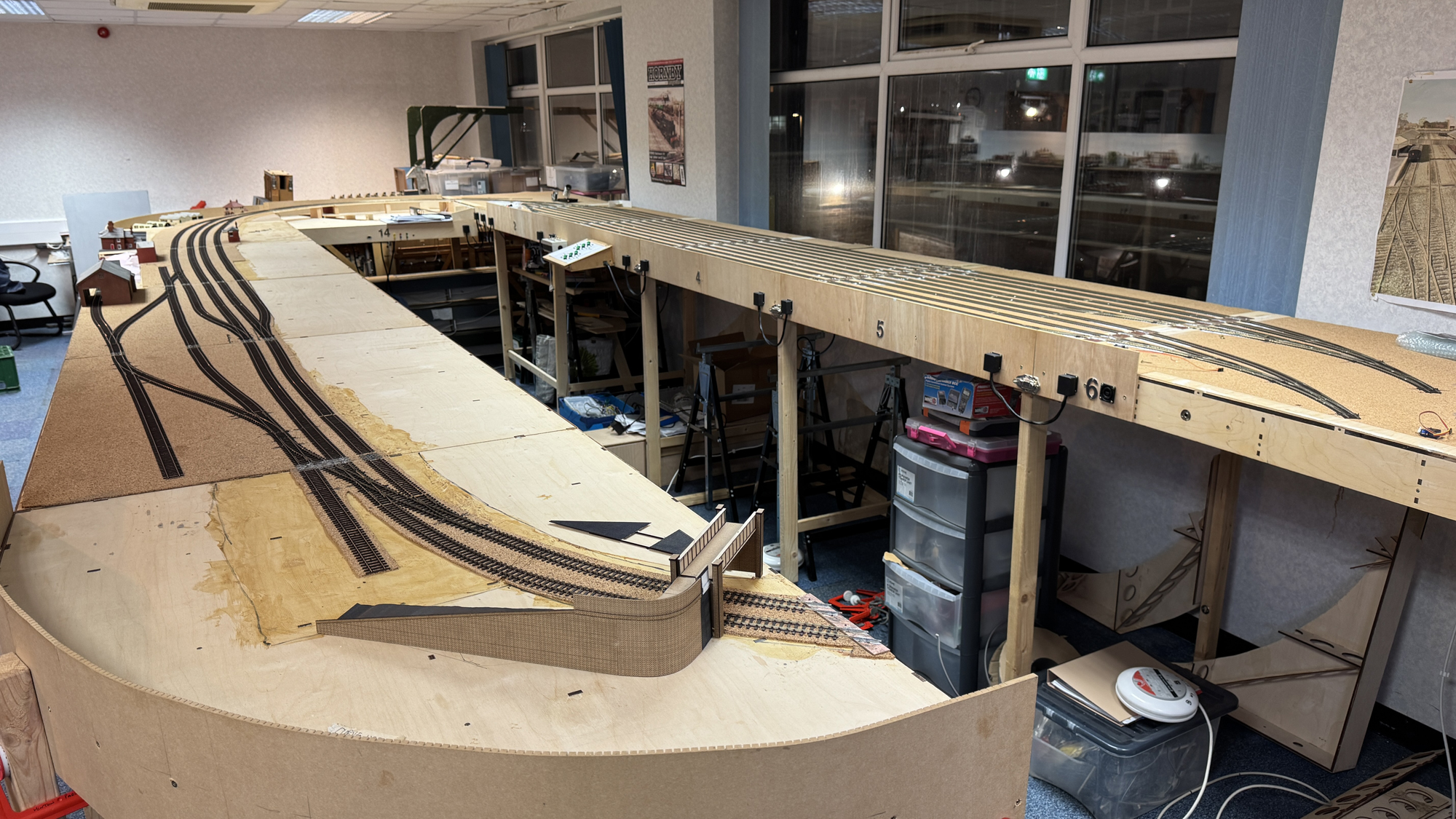 With our previous 00 layout Hinton Parva now dismantled, all the scenic front boards of West Wycombe have now been assembled together complete with the fiddle yard for the first time. The only remaining board to be completed is the one ‘bridge board’ at the ‘Wycombe’ end of the layout that is being made to be a lifting section to give easier access to the central operating area. Work continues on completing the woodwork for the leg braces now the layout is set up to ensure the best economical stability.
Electrics.
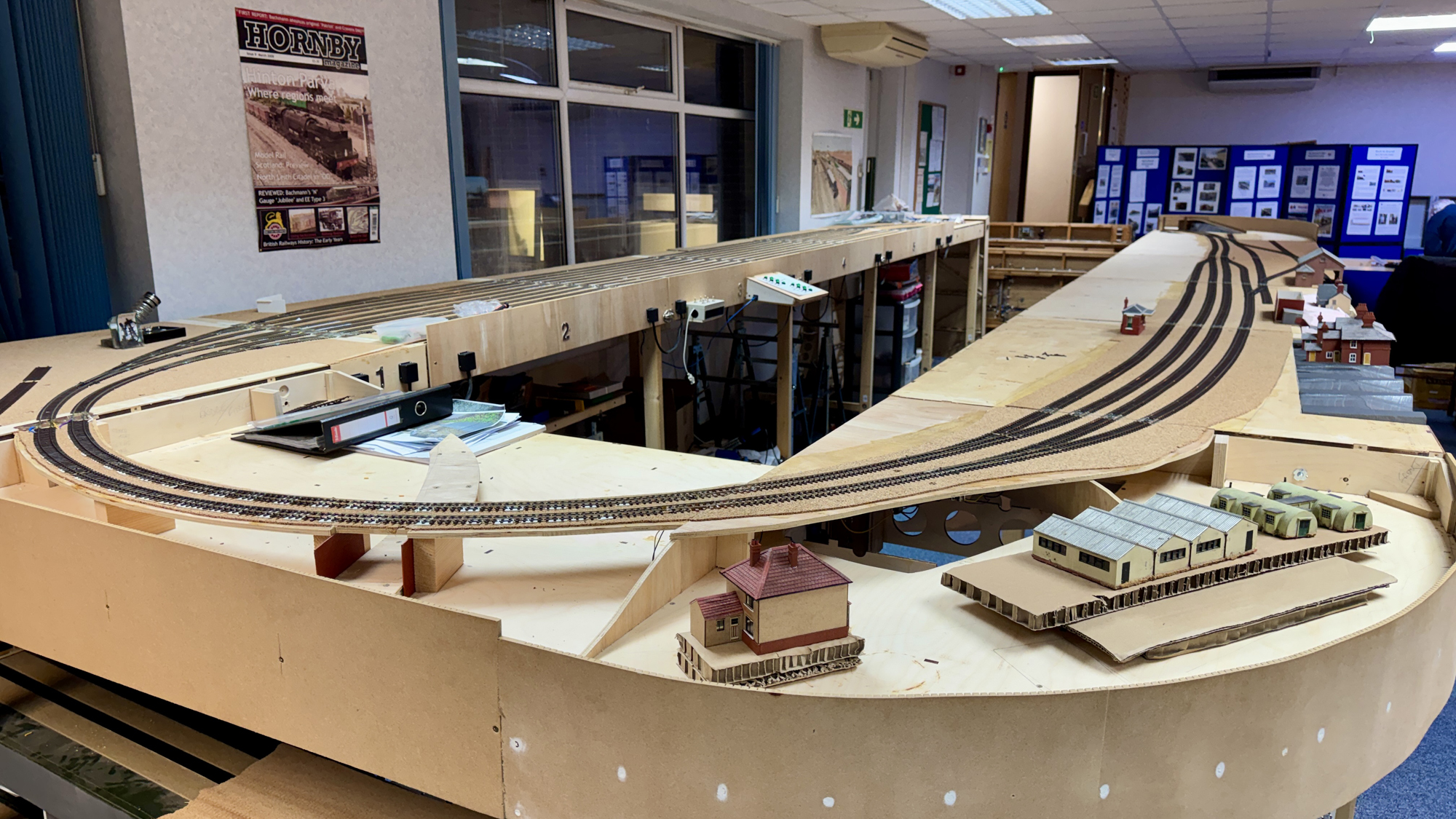 The wiring of the front scenic boards was completed prior to the being assembled and will now undergo full testing in the coming weeks. We are making use of a comprehensive set of power supplies and DCC command and booster equipment, acquired from a previous attempt at building a replacement for the clubs Hinton Parva layout.
Included in this work is the circuitry that allows the up line (inner circuit) to be run from an analogue (DC) controller. This has been tested to the extent that a laptop can be used to control locomotives. This will allow mobile phones to be used as DCC handhelds. Work is ongoing on documenting the system including the Cbus programs and software used for point control.
Scenics.
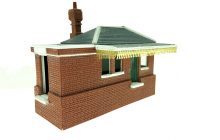
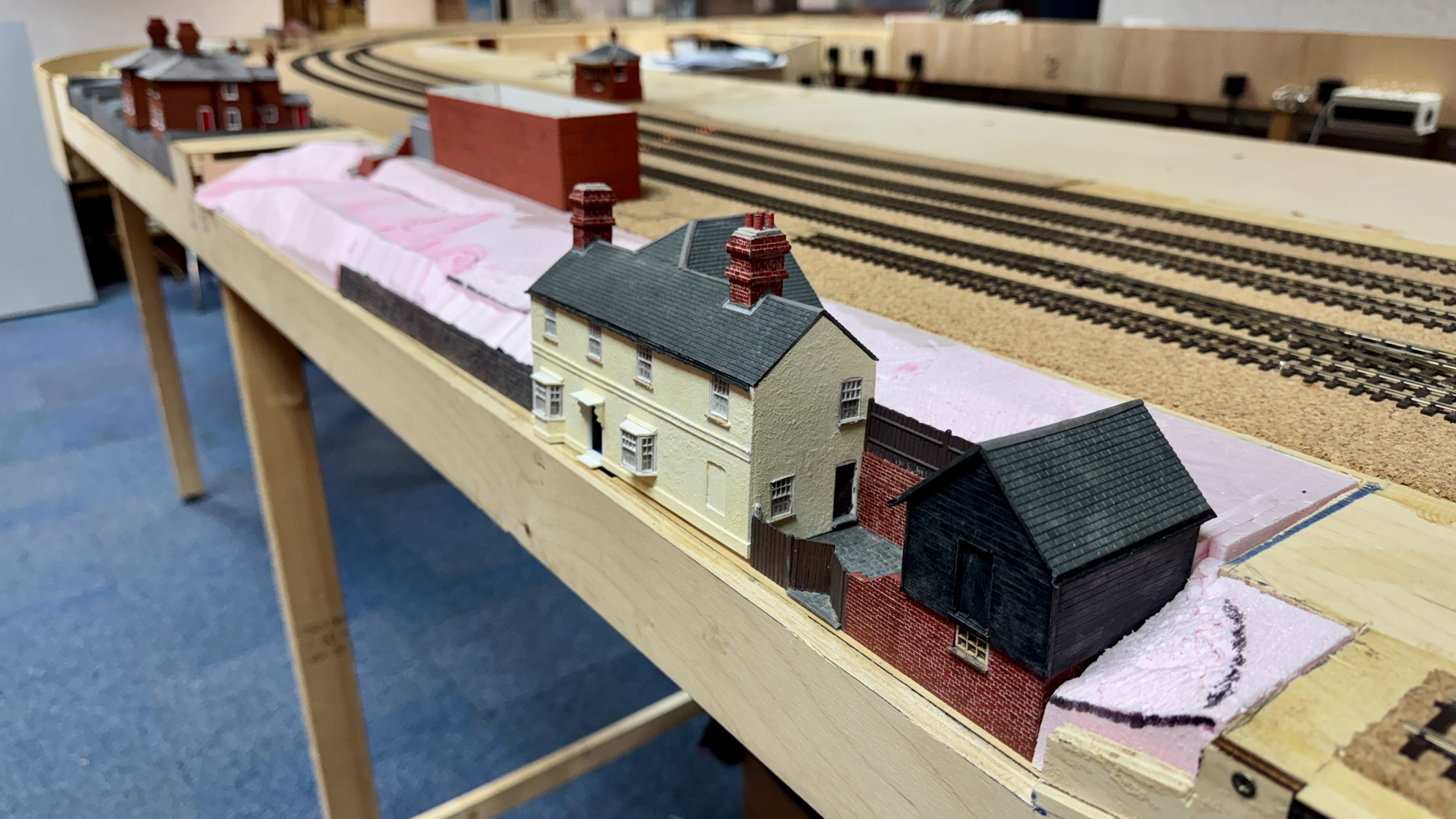 Once the electrics haver been fully tested work will start on base for the station platforms and ballasting. Work has started on some of the main buildings; the Up waiting room is virtually complete bar the window frame and painting (which will take place at the same time as the main station building, the main station building.
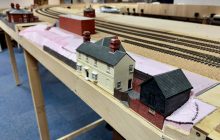
The Friend in Hand pub that will be a feature building right at the front of the layout and at the lower West Wycombe Road level is now nearly finished and awaiting final painting of the external rendered walls.
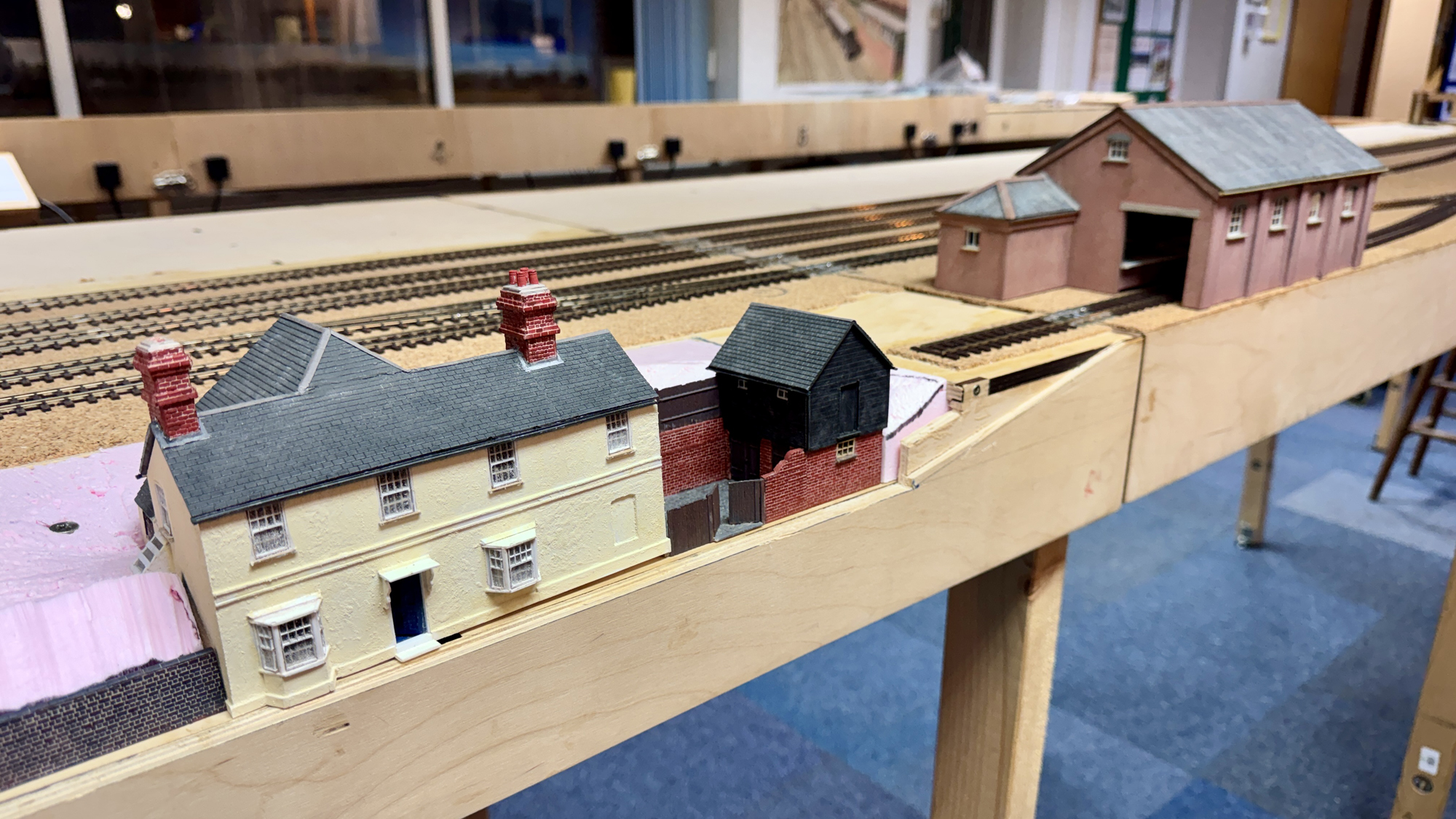 More details on the build of this model can be read here…
The terrain around the pub including the steep access road to the station forecourt and goods yard has started to be formed from lightweight polyisocyanurate insulation board and has allowed the position of the Friend in hand pub to be trial fitted.
Final details on the pub such as downpipes and signage is still to be added.
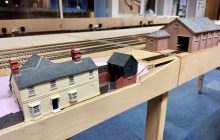
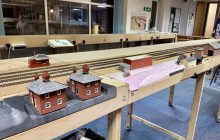
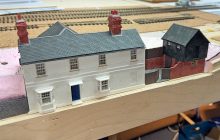
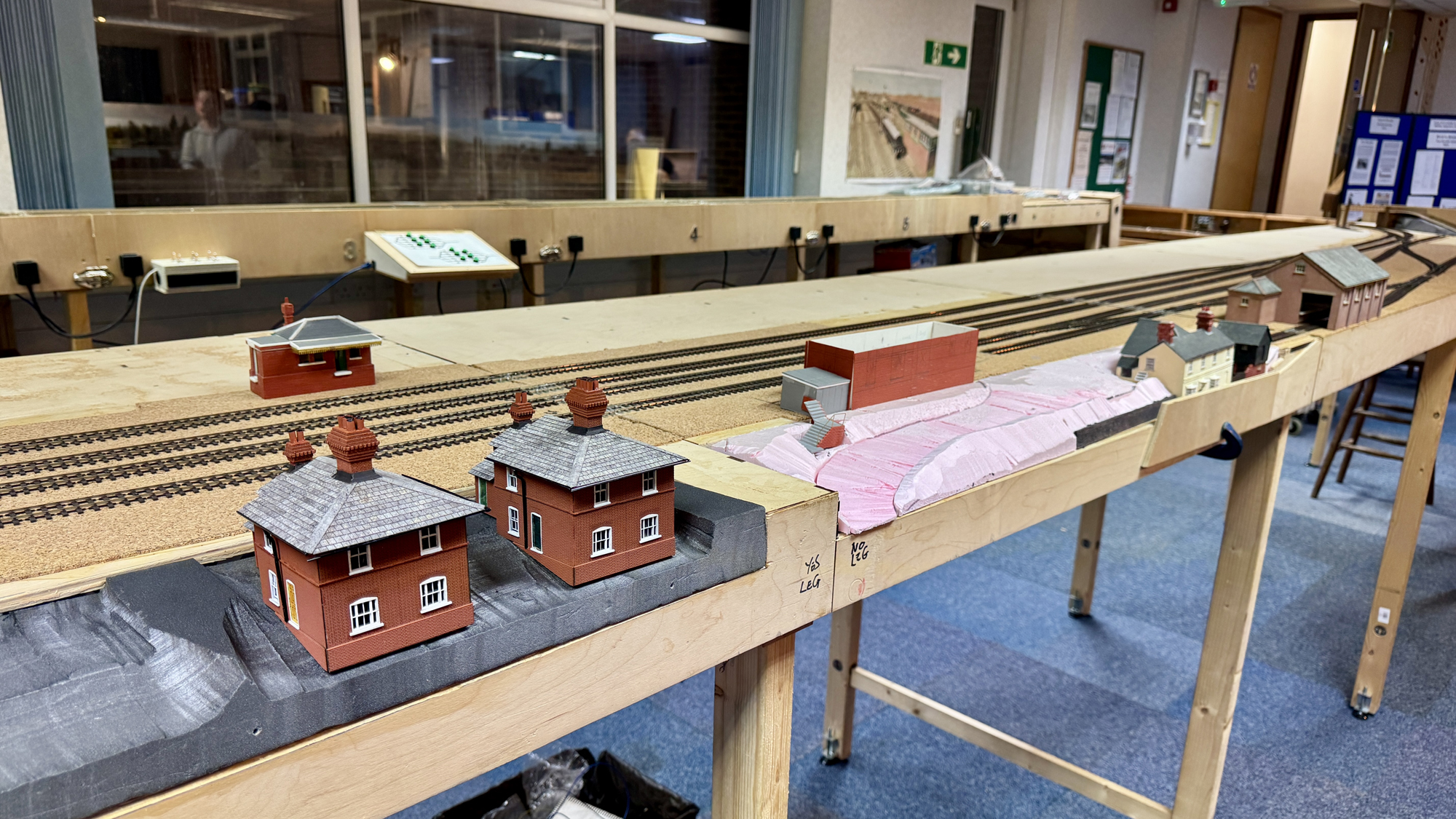 Construction using laser cutting has started on the five pairs of semi-detached West Wycombe Road houses, that will be located to the west (left) of the Friend in Hand pub along with their front gardens, and sloping driveways and rear gardens that back on the station platform.
The first two semis have been assembled and base painting completed prior to final brickwork painting to match the prototypes. A few tweaks to the Chimneys and roof overhangs are also going to be made.
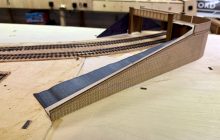
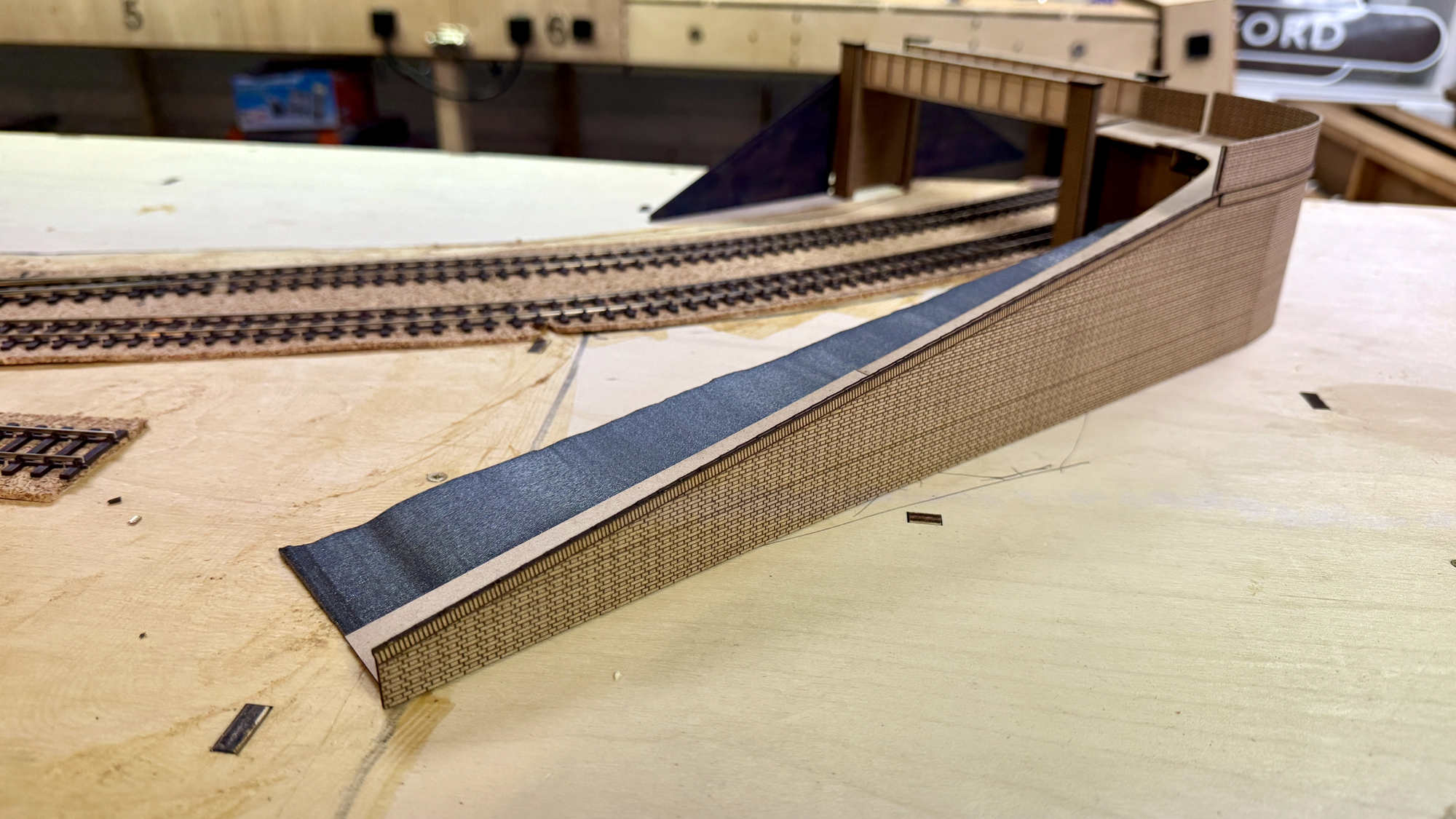 The ‘Dashwood’ footbridge at the east ‘Wycombe’ end with its characteristic large curved retaining wall has also been laser cut and ready for painting.
A section of the actual West Wycombe Road will also be modelled here (it will be off scene along the front of the other scenic boards).
All along the rear of the layout the rising ground levels will be formed using traditional model scenic techniques.
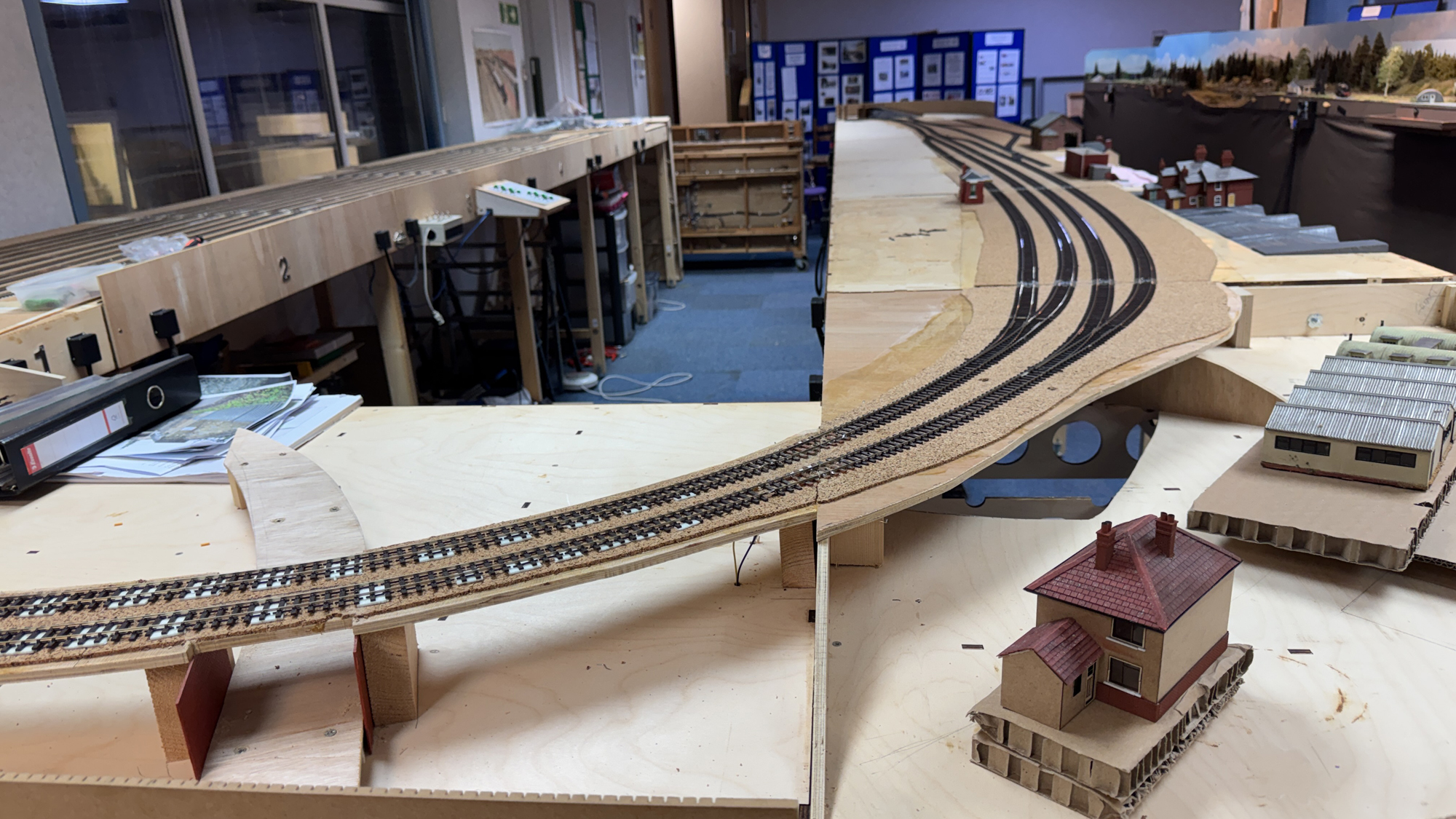 At the west end of the layout a representation of Beechwood Road with its houses and furniture factory is under way. The houses based on the three prototypes are being lasercut, whilst the factory is utilising a building and Nissen huts that have been carried over from, and as a nod to, the last three Society 00 gauge layouts and are nearly 50 years old.
On the ‘bridge’ board at the west end will be Cookshall Lane, its bridge (complete with original Wycombe Railway Co abutments) and the curving embankment that includes the old formation of the original Wycombe Railway Co line that is still there to this day slightly lower than the ‘new’ line.
Research.
Our ‘Back to Brunel’ research project continues to reveal more information on West Wycombe station during its working life and the route in general through High Wycombe. The contemporary photographs and level of detail that has been provided by people who knew or worked on the Joint during the 1950s and 60s is enabling us to create a realistic model of West Wycombe despite its closure to passenger services in 1958 and freight traffic in 1963, and then the swift demolition of railway structures soon after.